21 Boy and Girl Shared Bedrooms: Layouts for Privacy & Small Spaces
Let’s be real: putting a brother and sister in the same room isn’t just about paint colors—it’s about keeping the peace. If you’re in a tiny apartment, every inch counts. Designing a shared space is a real puzzle, especially when they start asking for their own “zones.”

In this post, I’m sharing 21 clever ways to split a bedroom for a boy and girl without building a permanent wall. Let’s reclaim your sanity and their space.
highlights:
1. Shared Bedroom Ideas for Small Rooms
2. Toddler Boy and Girl Shared Room Ideas
3. Shared Room Ideas for Different Ages or Styles
4. Shared Room Storage Hacks That Actually Work
5. Lighting and Decor Ideas for Both Kids
🛑 Real Talk: Safety is Non-Negotiable!
Before you start moving furniture, remember that kids’ spaces have their own rules. If you’re using a divider for privacy, keep these in mind:
- Anchor Your Furniture: Bookshelves make great dividers, but you must anchor them to the wall. Kids are climbers, and a tipping shelf is a nightmare you don’t want.
- Watch the Windows: A curtain divider is great, but don’t block the only window! Both kids need natural light and fresh air to stay happy.
- Bunk Bed Headroom: Ensure the top bunk has at least 30 inches of space from the ceiling so nobody wakes up with a bump on their head.
Creative Ideas for a Boy and Girl Shared Bedroom Decor:
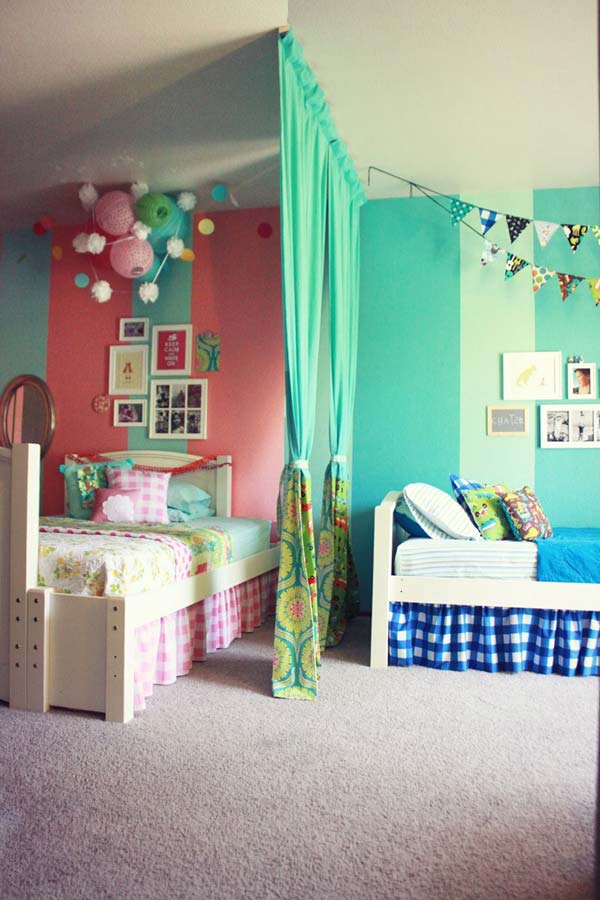
A decorative standing screen covered in fairy lights creates a cozy divider between two beds, making the shared space feel more private.

This shared bedroom uses floor-to-ceiling sheer curtains on a ceiling track to create separate, private zones for each child while still feeling open and connected. Soft natural light, plants, and neutral tones make the space calm and inviting for both siblings.

The room is divided by a long mint-green curtain, creating two separate spaces for a boy and a girl.
1. Shared Bedroom Ideas for Small Rooms
Tiny room? Don’t panic. You don’t need a mansion, just a better strategy. Honestly, small spaces force you to think smarter, and the result often feels super cozy instead of cramped.
Bunk beds with storage drawers: The “Label” Hack for Bunk Beds. Bunk beds with drawers are the ultimate go-to. Pro Tip: Label each drawer with the kid’s name. It saves a massive amount of morning drama over “who’s touching my stuff.”
Loft bed + desk combo: If one kid’s a little older, giving them a loft bed with a desk underneath means you’re doubling the floor space instantly. It also makes them feel “grown-up,” which is a bonus.
Half divider bookshelf: The Half-Divider Bookshelf. Trust me, this is gold. Use an open bookshelf (like the IKEA KALLAX) to give each child a “side.” It creates a boundary without blocking the light.
Light walls + personal corners: Stick with pale shades on the walls (white, beige, light gray) and let each kid personalize their half with posters, bedding, or a pinboard. That way the room doesn’t look chaotic, but both kids still feel ownership.
Pro tip: In small rooms, think vertical. Tall shelves, wall hooks, and hanging storage bags keep the floor clear so kids can actually, you know, play on it.

The two beds are tucked into a cozy corner, separated by a built-in bookshelf that offers both privacy and a place for storage. More info: maplehouseca.wordpress.com


A gray curtain hung on a black rod serves as a stylish divider between the two beds, which have different headboard designs.

This room features an innovative bunk bed, with a crib on the top level and a single bed below, and each space has a small desk area.

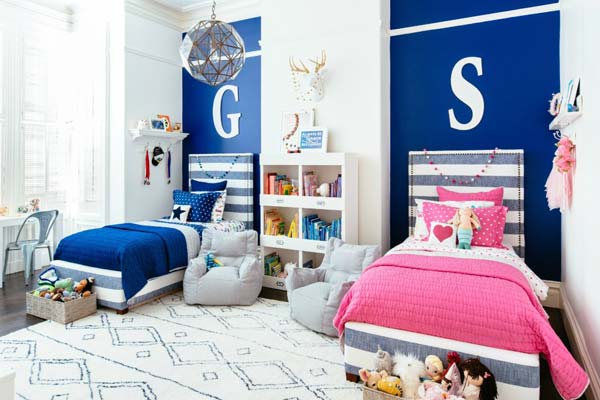
The beds are placed against contrasting blue and white walls, with different colored bedding to distinguish between the boy’s and girl’s sides.
2. Toddler Boy and Girl Shared Room Ideas
Toddlers in one room? This is where the real “fun” starts. It’s sweet, chaotic, and basically feels like refereeing a WWE match at 8 PM.
Floor beds or low frames: Montessori-style floor beds are amazing for toddlers. No climbing, no falls, and it makes late-night cuddles much easier (yes, you’ll be crawling in there at some point).
Separate toy storage zones: Keep Toy Zones Separate. This saves your sanity. Nothing sparks a fight faster than a truck buried under Barbie dolls. Two bins = Peace.
Neutral but playful theme: Go with base colors like soft yellow, pale green, or light gray. Then add personality with bedding—dinosaurs for one, rainbows for the other. This way, you don’t end up with a room that looks like a carnival exploded.
Double-duty furniture: A dresser that works as a changing table now, but later just holds clothes. Or a toy chest that doubles as a bench for reading. Toddlers grow out of stuff fast, so furniture that adapts saves money and headaches.
Pro tip: Keep bedtime routines synced. If one’s trying to sleep while the other is still singing “Baby Shark,” nobody wins.

In this room, a built-in wooden shelving unit separates two beds, each with a canopy frame, providing a distinct space for a boy and a girl.
Related: 21 Most Amazing Design Ideas For Four Kids Room
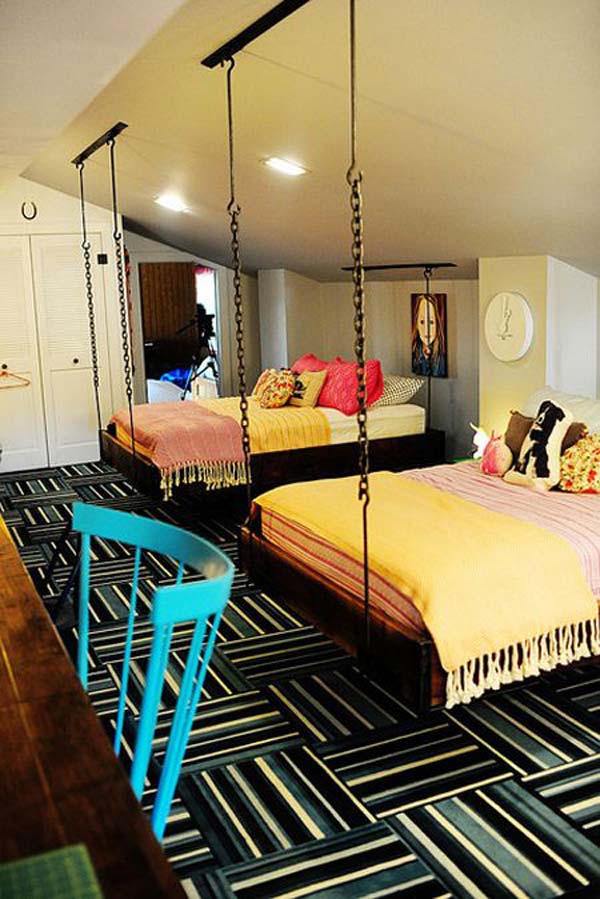
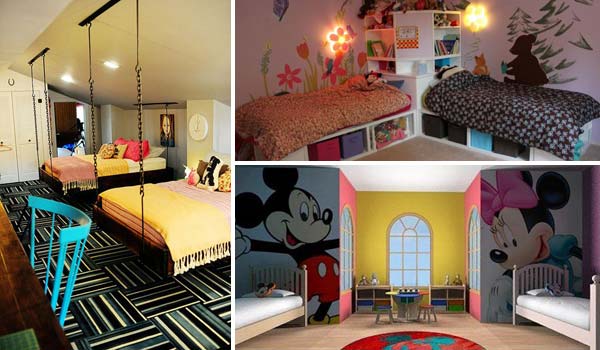
This room features two unique beds that are suspended from the ceiling by chains, a playful design for a shared bedroom.
3. Shared Room Ideas for Different Ages or Styles
Designing a room for a brother and sister gets tricky when they’re at different stages, or just have totally different tastes. Younger kids usually don’t care if the walls are gray or green, but older ones? They definitely have opinions.
Neutral walls + personal pops: Keep the big stuff (walls, furniture) in neutral shades like gray, beige, or white. Then let each kid add personality through bedding, posters, or wall art. I once let my son pick dinosaur bedding while my daughter picked rainbows, and because the walls were neutral, it didn’t clash, it just looked playful.
Divide the room into zones: This doesn’t mean building walls. Even a rug, a curtain, or a tall bookshelf can give each child their “side.” It’s more about creating boundaries so they feel like they have personal space.
Respect age gaps: If one kid’s older, give them a corner that feels more “grown-up,” like a small desk or loft bed, while the younger one keeps a play zone. That way nobody feels like they’re stuck in a room that doesn’t fit their age.

A creative bookshelf divider separates the two twin beds, with each side of the room decorated in a different color scheme.
Related: Top 19 Fantastic Fairy Tale Bedroom Ideas for Little Girls
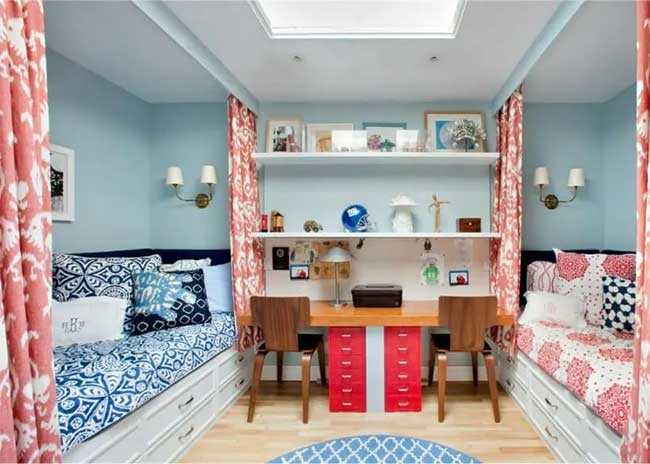
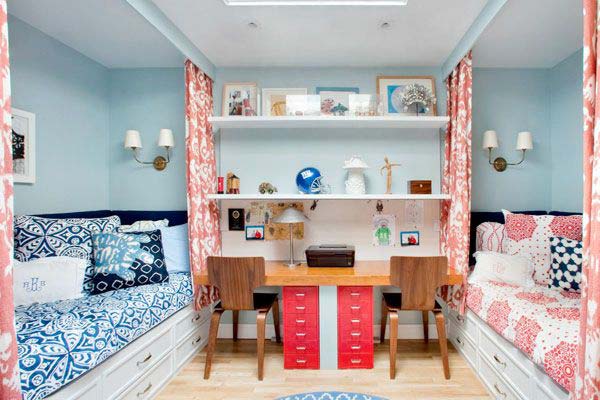
(Above ) By thinking ahead and adding a touch of imagination, you can easily fit everything you need into a room that’s shared by many. We adore the smart ideas in this space: a desk that everyone can use, but with its own drawers for each kiddo, handy hidden storage right under the beds, and those lovely ikat curtains that give a cozy private feel.
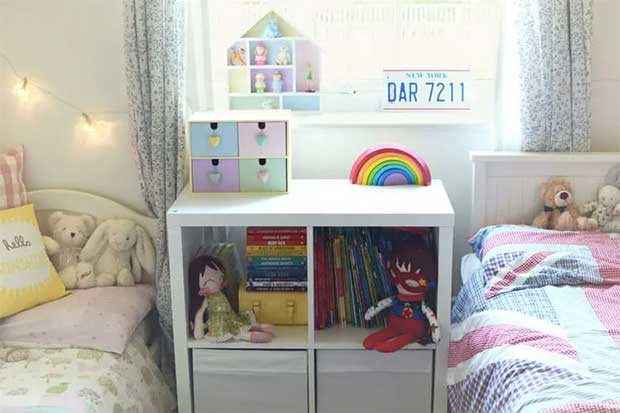
(Above) In case the shared sleeping spot happens to be on the petite side, a basic bookshelf with little compartments assigned to each child will make sure that everyone’s stuff finds a home.
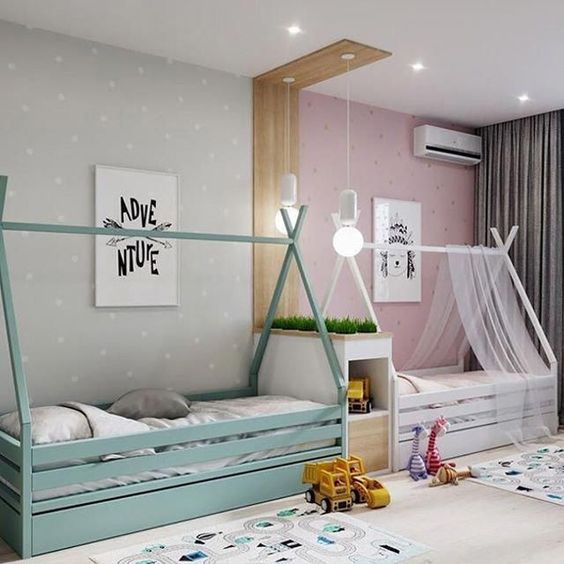
4. Shared Room Storage Hacks That Actually Work
With two kids, you’re basically playing Tetris with their entire lives. Clothes, toys, books—everything needs a home.
Split the closet: If you’ve got a closet, divide it down the middle. Give each child their own space so fights over “who took my shelf” don’t even start.
Under-bed bins: Lifesavers for stuff like seasonal clothes or extra bedding. Out of sight, but still easy to grab when you need it.
Built-in shelves: Perfect if the closet isn’t big enough. I once added floating shelves above a dresser—looked good and kept the floor free.
Label everything: Label EVERYTHING. Bins, baskets, hangers… labels stop arguments cold. Kids respect a box much more when their name is on it.
Related: 27 Kids Rooms Are So Amazing That Are Probably Better Than Yours
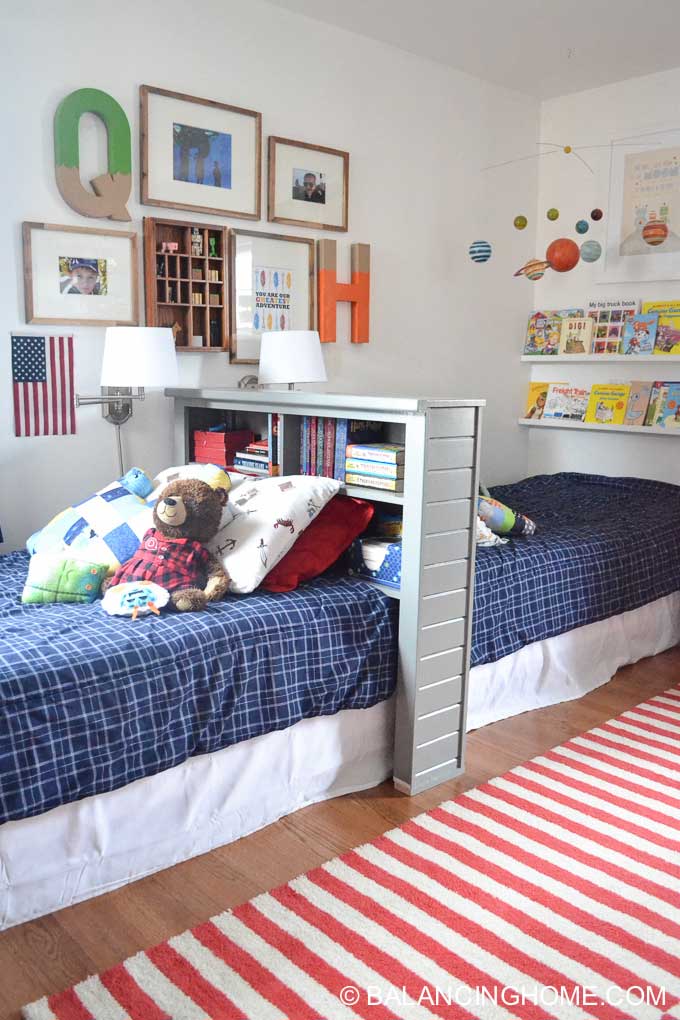
A bookshelf acts as a practical divider between the two beds, which have contrasting bedding to define each child’s area.
Image via Balancing Home
Related: These 21 Nautical-Inspired Room Ideas Your Kids Will Say WOW
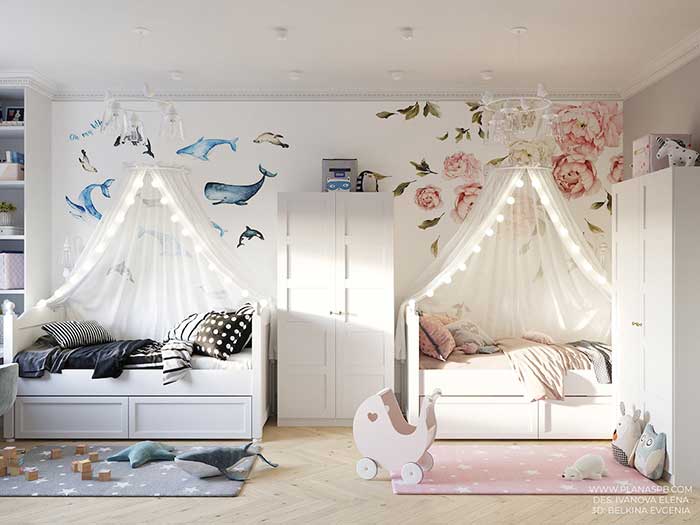
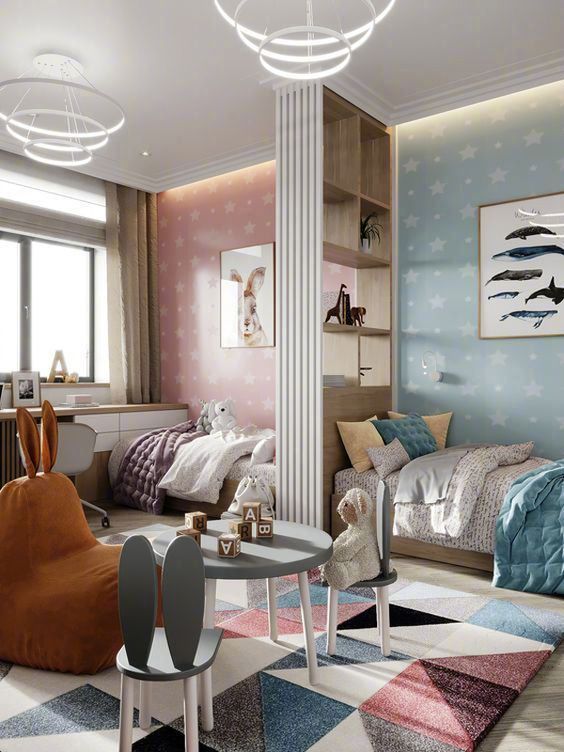
The shared space is made distinct by whimsical wall art, with one side featuring blue whales and the other adorned with pink floral designs.
Image via Behance

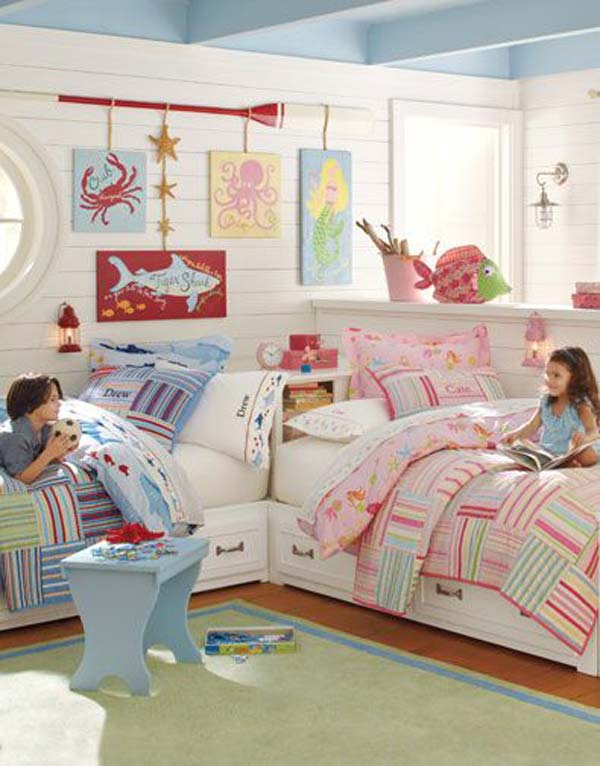
This room separates the two beds with a small cabinet, and the walls are decorated with different sea-themed artwork, like crabs and mermaids, to personalize each side.
Related: 36 Exciting Ideas To Decorate Kids Rooms with Colored Chalkboard Paint
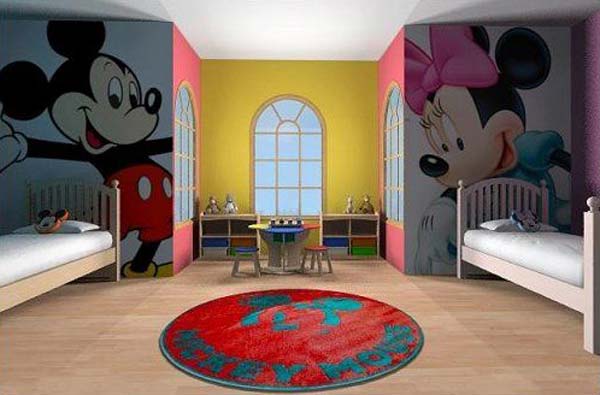
Large murals of Mickey and Minnie Mouse on opposite walls clearly designate the boy’s and girl’s areas within the shared room.

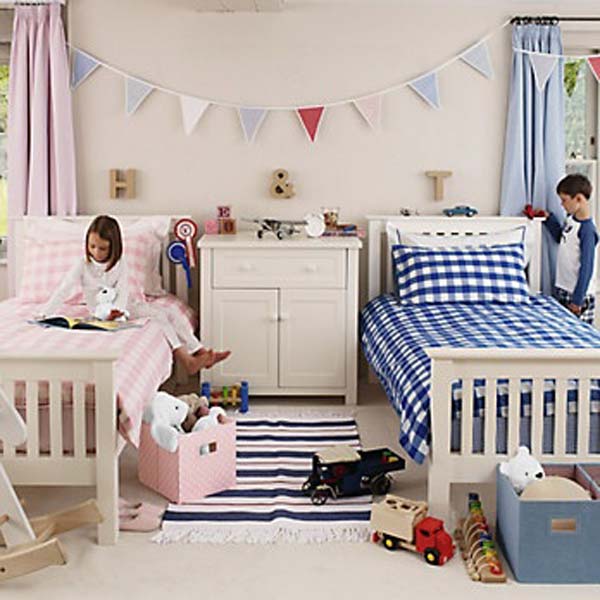
A small white dresser separates the two beds, each with different colored bedding and curtains, creating separate yet cohesive spaces for a boy and a girl.
Related: Top 28 Most Adorable DIY Wall Art Projects For Kids Room
5. Lighting and Decor Ideas for Both Kids
The right lighting changes the whole vibe of a shared room.
Use soft, warm ceiling lights to keep things cozy.
Add individual bedside lamps so each kid can read or chill without bothering the other.
String lights or fairy lights? Always a hit—they make the room feel special without costing much.
When it comes to decor, keep it balanced. Mix in some shared, gender-neutral pieces like animal prints or nature art, then let each kid sneak in their favorite touches—superheroes for one, unicorns for the other. It feels fair, but still personal.

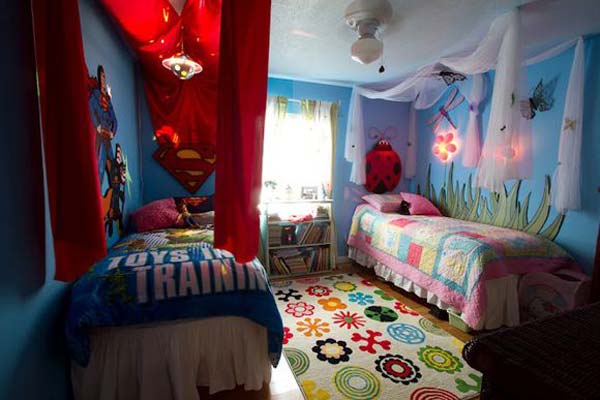
The room is divided by color, with a red Superman theme on one side and a whimsical, floral-themed space with a large ladybug on the other.

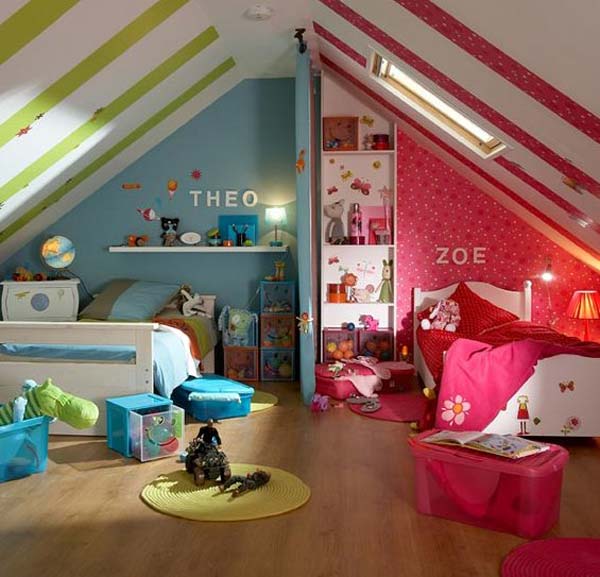
This attic bedroom uses a central built-in bookshelf to divide two spaces, with different diagonal stripes on the walls and ceiling of each side.
Related: 26 Cute Ideas To Add Fun To a Child Room
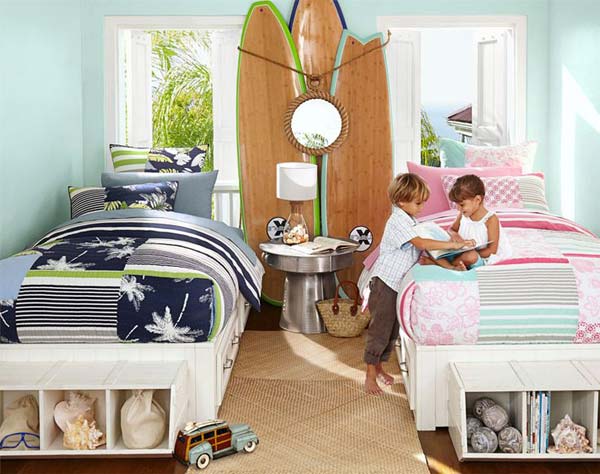
A pair of surfboards and a large mirror in the middle separate the two beds, which have different patchwork-style bedding that complements a beach theme.

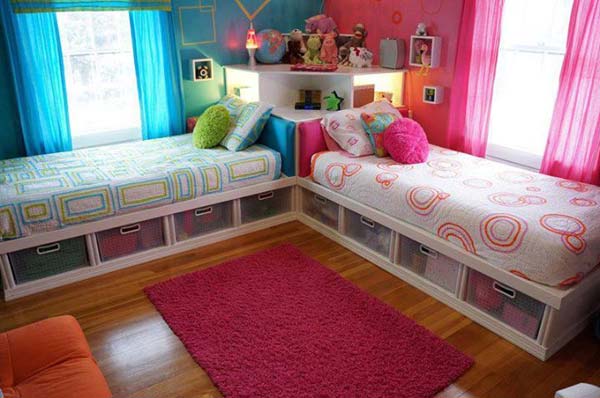
Two beds are arranged in an L-shape with a shared storage unit in the corner, and the bold blue and pink walls with matching curtains define each side.
When it comes to decorating the room, there are plenty of boy and girl bedroom ideas to choose from. You can also explore specific girls bedroom ideas and boys bedroom ideas for more inspiration.
Adding personal touches, like posters, picture frames, and decorative pillows, can make the room feel more cozy and inviting. Don’t forget to involve the children in the decorating process, so they feel proud of their space and have a say in how it looks.
Related: 28 Genius Ideas and Hacks to Organize Your Childs Room
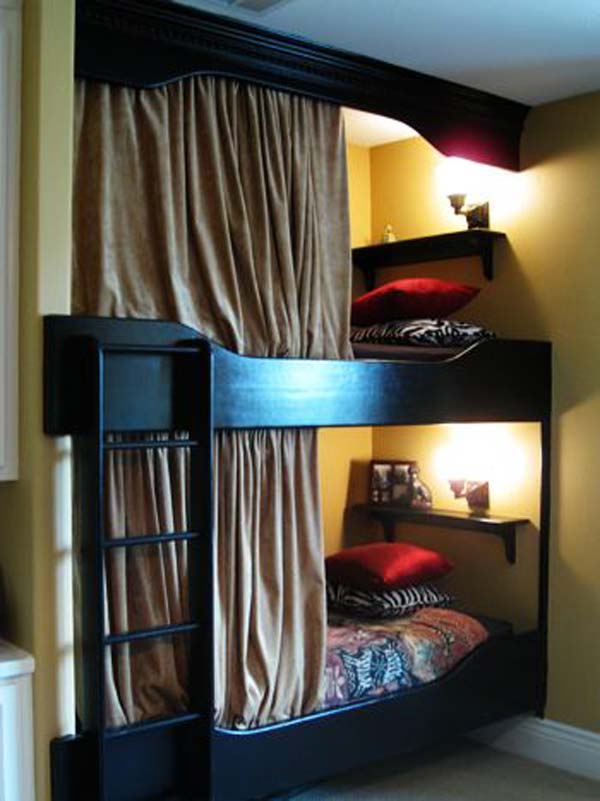
This bunk bed setup uses curtains to create private nooks, with the dark wood and neutral tones giving each bed a cozy, enclosed feel.
Source: theinspiredroom.net

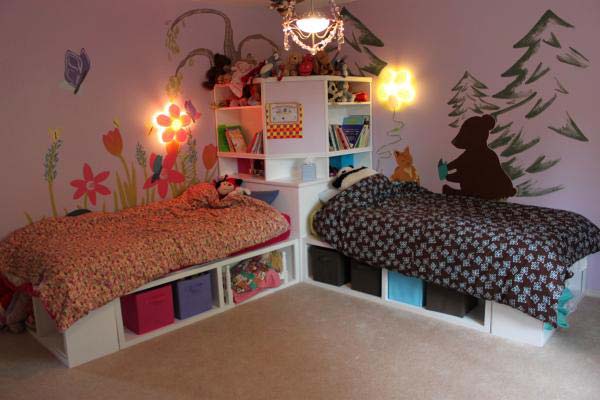
A creative storage unit separates two beds placed in an L-shape, with whimsical painted scenes on the walls to define each area.
Source: ana-white.com
Related: 21 Fairy Tale Inspired Decorating Ideas for Child’s Bedroom
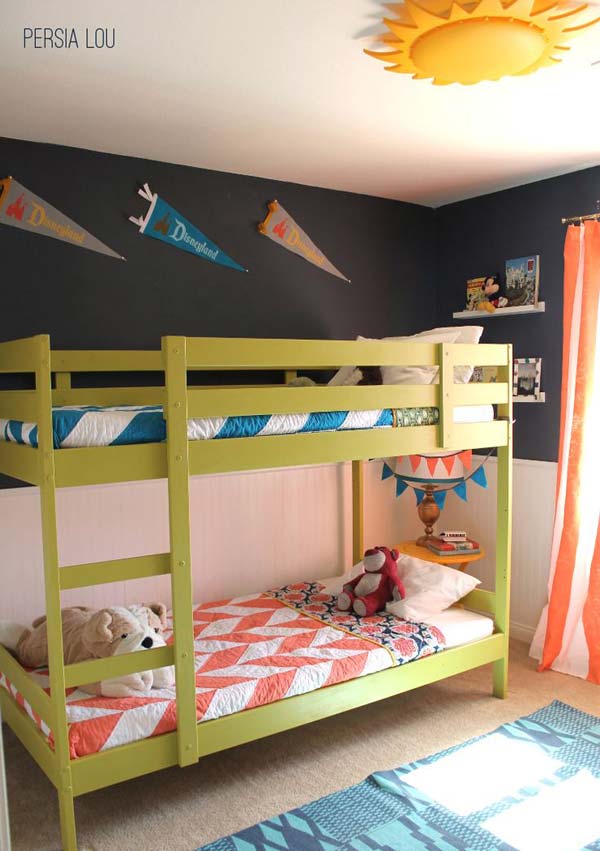
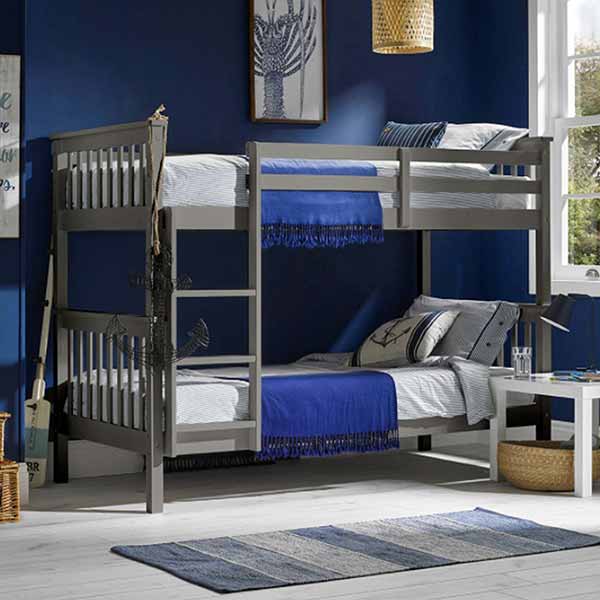
This room features a lime-green bunk bed against a dark blue and white wall, with a fun sun-shaped light on the ceiling and pennants hanging on the wall.
Source: persialou.blogspot.com

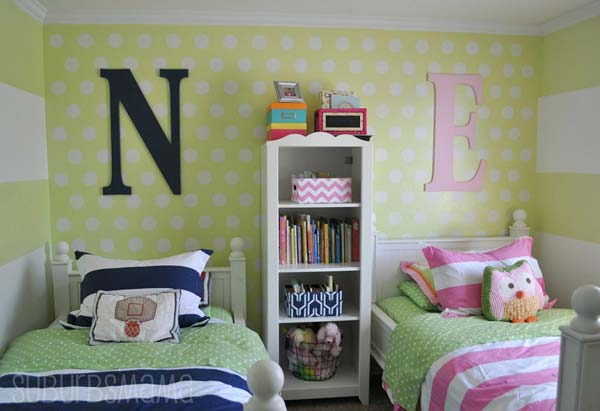
A central white bookshelf divides the two beds, with large initial letters on the yellow polka-dot walls to personalize each child’s space.

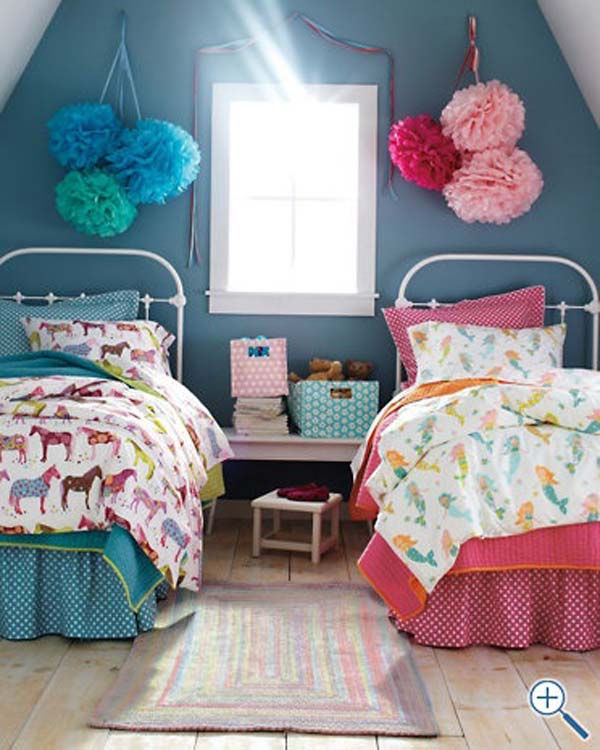
Two twin beds with a shared window are decorated with different bedding patterns—one with horses and the other with mermaids—but are united by a cohesive color palette.
Related: 25 Amazing Kids Rooms to Get you Inspired
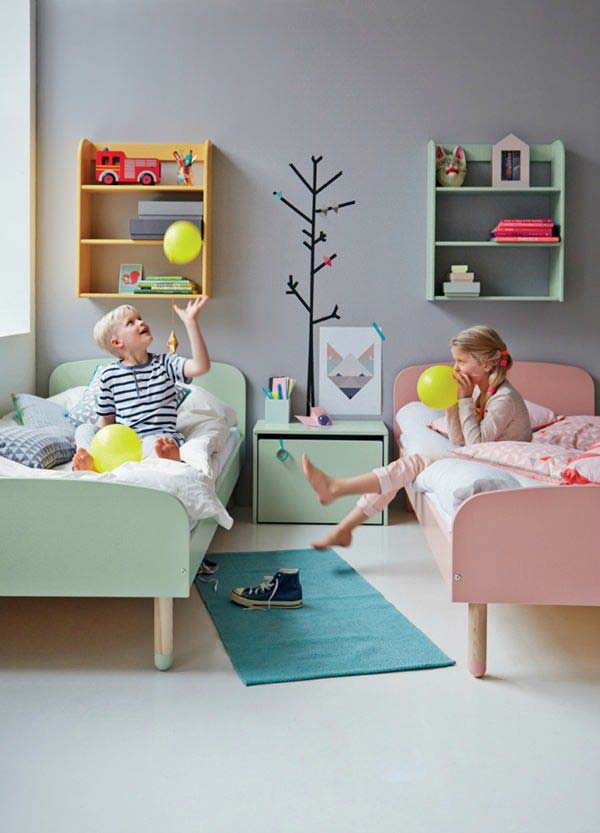
This simple room uses two beds with soft, rounded frames and different colored bedding, with a small rug and a tree-like coat rack to complete the modern, minimalist design.

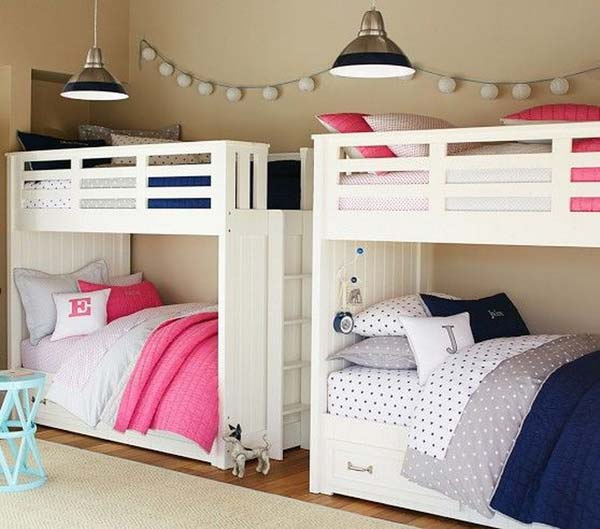
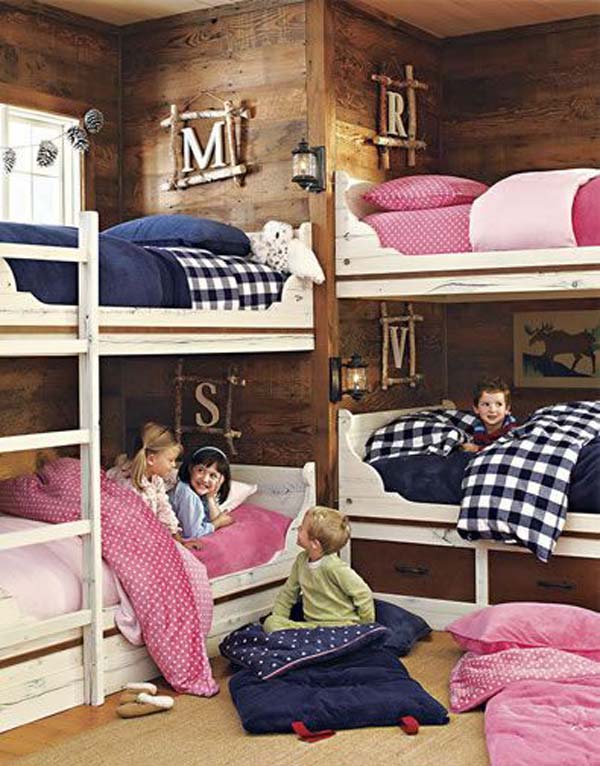
Two white bunk beds are positioned perpendicular to each other, with each bed having different colored bedding to designate each child’s space.
sharing a room isn’t always smooth sailing for a brother and sister. But as you’ve seen, you don’t need a massive house or a huge budget to make it work. It’s all about those smart dividers and giving each kid a tiny corner to call their own. At the end of the day, it’s not about having a perfect ‘magazine’ room—it’s about creating a space where they feel happy, safe, and maybe (just maybe) one where they’ll actually sleep instead of fighting over toys!

The room’s design is symmetrical, with two beds on opposite sides of a shared desk and shelving unit. The blue and red patterned bedding creates a distinct look for each side.
Source: teenvogue.com

The room is designed with a cozy, rustic cabin theme, using bunk beds with different colored bedding and large initials above each bed to separate the spaces.

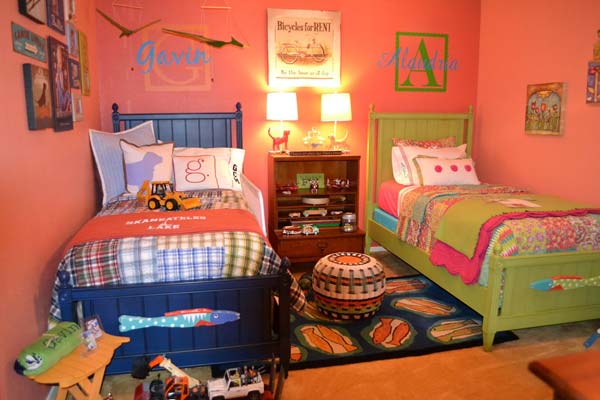
A short bookshelf separates the two beds, which have different colored frames and bedding, and the names of the children are painted on the wall above each bed.

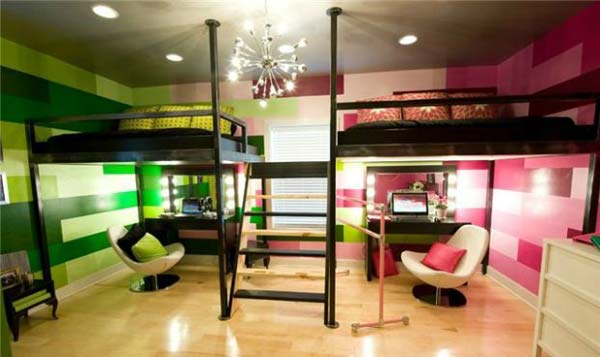
This stylish room uses two loft beds, each with a desk and chair underneath, and the walls are painted with contrasting green and pink stripes to separate the spaces.
FAQs About Boy and Girl Shared Bedrooms
How do you divide a shared bedroom without building a wall?
Honestly, you don’t need a contractor. A tall bookshelf anchored to the wall, a thick blackout curtain on a ceiling track, or even just positioning two wardrobes back-to-back works wonders for creating that split bedroom for a boy and girl.
What colors work best for a boy and girl shared room?
Stay neutral on the big stuff—light gray, beige, or soft white. It keeps the room looking calm. Then, let the kids’ bedding and posters bring the “pop.” It’s much cheaper to change a pillowcase than to repaint the whole room when they change their minds next month!
How can I make a small shared bedroom feel bigger?
Think vertical. Tall shelves, wall hooks, and hanging organizers clear up the floor so kids can actually play. Also, keep furniture multipurpose—like beds with drawers underneath or a dresser that doubles as a toy chest.
Can toddlers and older kids really share the same room?
Yep, but it takes some planning. Give the older kid something that feels “grown-up,” like a desk or loft bed, while the toddler keeps a play zone with floor beds or soft mats. The trick is making sure both feel like the room fits their age—even if they’re years apart.
So yeah, shared bedrooms aren’t always smooth sailing, but with a few smart tricks, they can actually be fun and totally functional. At the end of the day, it’s not about perfection—it’s about creating a space your kids feel happy in (and maybe one where they’ll actually sleep instead of fighting over toys).